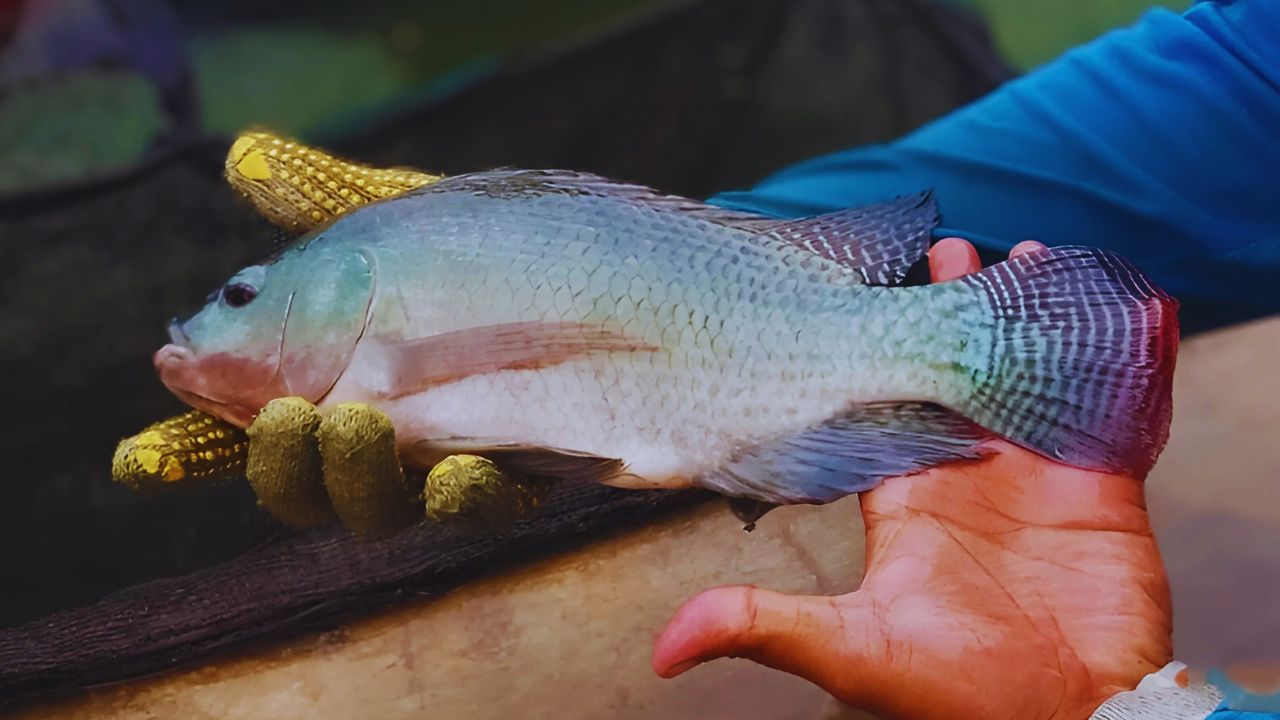

The Nile tilapia (Oreochromis niloticus) is one of the most prominent freshwater fish species in global aquaculture. Its appeal lies in its exceptional adaptability to diverse environmental conditions, rapid growth, and delicious flavor. This fish has become a vital protein source for millions, particularly in developing countries, where its cultivation significantly contributes to food security and local economies.
The history of Nile tilapia is deeply rooted in human civilization. Historical evidence indicates that the species was farmed over 3,000 years ago. In ancient Egypt, it frequently appeared in artifacts and reliefs depicting fishing activities. Beyond serving as a food source, Nile tilapia also symbolized prosperity in Egyptian society.
Today, Nile tilapia ranks among the most widely farmed freshwater fish species globally, with significant cultivation in Africa, Asia, and Latin America. Its versatility in farming methods, ranging from traditional ponds to advanced aquaculture systems, makes it a top choice for fish farmers.
One of the primary reasons for its popularity in aquaculture is its ability to thrive in a variety of environmental conditions, including low-quality water. Nile tilapia can consume a wide range of natural food sources, such as plankton, aquatic plants, and organic matter, keeping production costs relatively low compared to other species.
However, the cultivation of Nile tilapia comes with challenges. For instance, it is sensitive to low temperatures and cannot survive prolonged exposure to water temperatures below 10–11°C. Additionally, early breeding can pose problems, as the fish tend to reproduce before reaching market size, which may complicate production management.
Taxonomy and species of tilapia
Tilapia, commonly referred to as "nila" in some regions, is a collective name for a group of cichlid fish native to Africa. This group comprises three primary genera significant in aquaculture: Oreochromis, Sarotherodon, and Tilapia. While these genera share many traits, their most distinct differences lie in their reproductive behaviors.
All tilapia species are nest builders, where fertilized eggs are guarded within a nest by one of the parents. However, species within the genera Sarotherodon and Oreochromis exhibit an additional behavior known as mouthbrooding. In this process, fertilized eggs are taken into the parent's mouth for incubation and protection, continuing for several days after hatching. In Oreochromis species, this role is exclusively performed by the female, whereas in Sarotherodon, both male and female parents may participate in mouthbrooding.

Nile tilapia incubate their eggs in their mouths, providing protection until the eggs hatch and the fry are ready to fend for themselves: BPPSDM
Over the past five decades, tilapia farming has expanded significantly in tropical and subtropical regions worldwide. Today, nearly all commercially farmed tilapia outside Africa belong to the genus Oreochromis. Among these, the Nile tilapia (Oreochromis niloticus) is the most dominant, accounting for over 90% of commercial tilapia production outside Africa, according to data from The Fish Site. Research indicates that Nile tilapia is now cultivated in more than 90 countries globally, thriving in both freshwater and brackish water systems.
In addition to Nile tilapia, other species are also farmed, albeit on a smaller scale. These include the Blue tilapia (Oreochromis aureus), Mozambique tilapia (Oreochromis mossambicus), and Zanzibar tilapia (Oreochromis urolepis hornorum).
The taxonomy of tilapia species has undergone numerous revisions over the past three decades, often leading to confusion. For instance, the Nile tilapia was previously known by various scientific names, including Tilapia nilotica and Sarotherodon niloticus, before being officially classified as Oreochromis niloticus, the name used today.
Reproduction of Nile tilapia
In all Oreochromis species, the reproductive process begins with the male excavating a nest in the shallow areas of a pond, typically at depths of less than one meter. This nest serves as the primary site for the male to mate with multiple females. Following a brief courtship ritual, female Nile tilapia deposit their eggs in the nest, with an average of two to four eggs per gram of the female's body weight, as reported by the Southern Regional Aquaculture Center. The male fertilizes the eggs, after which the female collects the fertilized eggs into her mouth (buccal cavity) for incubation.
The eggs remain in the female's mouth until they hatch, and the larvae (fry) continue to stay there until their yolk sac is fully absorbed. Even after they begin feeding independently, the fry often return to the mother’s mouth for protection during their early days of life.
Sexual maturity in tilapia is influenced by age, size, and environmental conditions. Mozambique tilapia (Oreochromis mossambicus) reaches sexual maturity at a smaller size and younger age compared to Nile tilapia (Oreochromis niloticus) and Blue tilapia (Oreochromis aureus). Tilapia in large lakes generally mature later and at a larger size than those farmed in smaller ponds. For example, Nile tilapia in certain East African lakes reach sexual maturity at 10 to 12 months of age, with a weight of approximately 350 to 500 grams. In contrast, under pond farming conditions, the same species can mature in just 5 to 6 months, weighing around 150 to 200 grams.
Feeding habits and nutritional requirements of nile tilapia
Nile tilapia (Oreochromis niloticus) exhibits a highly versatile diet, consuming a variety of natural organisms such as plankton, macrophytes, planktonic aquatic invertebrates, fish larvae, and detritus. Although supplemental feed is commonly provided in aquaculture, studies indicate that natural organisms still contribute 30–50% of the fish's growth. In comparison, natural organisms account for only 5–10% of growth in catfish. Nile tilapia is often considered a filter feeder due to its efficiency in consuming plankton.

The omnivorous nature of Nile tilapia is often utilized in integrated farming systems, where they serve as a secondary crop to help control pests and aquatic weeds: Satriyo Anggoro
However, unlike carp, Nile tilapia does not physically filter water through its gills. Instead, its gills produce mucus that traps plankton. This plankton-rich mucus is then ingested and digested. Plant material is broken down and absorbed along the length of the fish's intestine, which is typically six times the length of its body. While feeding, Nile tilapia can forage at the pond bottom for benthic invertebrates and detritus rich in bacteria, as well as consume mid-water invertebrates.
This ability to efficiently utilize natural food sources allows for impressive production levels. In well-fertilized ponds without supplemental feed, Nile tilapia can yield over 2,700 pounds per acre (3,000 kg/ha). Even in intensively fed ponds with minimal water exchange, natural organisms can provide one-third or more of the fish's total nutritional needs.
Nile tilapia requires ten essential amino acids, similar to other warm-water fish. The protein needed for maximum growth depends on the quality of the protein and the fish's size. For fingerlings, protein requirements can reach up to 50% of the fish's total body weight. However, for broodstock, feed typically contains 26–30% protein, with only about 10% derived from animal protein, as reported by the Southern Regional Aquaculture Center. In recirculating or flow-through systems, protein content may be slightly higher.
To support optimal growth, Nile tilapia requires digestible energy of 8.2–9.4 kcal per gram of protein. Additionally, essential fatty acids from the linoleic (n-6) group and vitamins similar to those required by other warm-water fish are necessary. Commercial tilapia feed is often fortified with vitamin and mineral premixes, similar to those used in catfish feed, to ensure these nutritional needs are met.