The aquaculture sector plays a crucial role in meeting the demand for fish consumption. A key factor in successful fish farming is maintaining optimal water quality in the fish habitat. However, the rainy season often presents significant challenges, as it introduces marked fluctuations in water quality parameters, potentially threatening the survival of farmed fish. This article explores the effects of the rainy season on aquaculture and suggests practical solutions to help stabilize the aquatic environment.
Effects of the rainy season on water quality parameters
1. Decline in pH levels
Rainfall frequently increases water acidity, as rainwater tends to have a naturally acidic pH due to dissolved gases like carbon dioxide, which forms carbonic acid upon contact with water. This can lead to a notable drop in the pH levels of fish ponds. While the optimal pH for fish growth and health typically falls between 7 and 8, during the rainy season, pH can drop to 5 or even lower.
Low pH conditions can severely disrupt fish health, impairing their physiological functions and potentially leading to mortality if unaddressed. Acidic water affects the fish’s ability to absorb nutrients and oxygen through their gills, impacts their digestive processes, and weakens their immune system. Furthermore, low pH levels can increase the solubility of heavy metals, which can be toxic to fish.
2. Decrease in temperature
In addition to pH fluctuations, the rainy season often brings about a significant drop in water temperatures. While the ideal temperature range for fish growth is typically between 25°C and 30°C, rainy season conditions can cause water temperatures to fall below this range, sometimes reaching levels as low as 23°C or lower.
Such temperature drops can have serious implications for fish metabolism, slowing down digestive processes, nutrient absorption, and overall growth. Lower temperatures can also reduce fish activity, which in turn diminishes their appetite and growth rates. Sudden temperature changes are particularly stressful for fish, increasing their vulnerability to infections and diseases by weakening their immune systems.
3. Reduction in dissolved oxygen availability
During the rainy season, heavy clouds and frequent rain can block sunlight, which is crucial for phytoplankton—primary oxygen producers in aquaculture ponds. Phytoplankton rely on sunlight for photosynthesis, a process that generates oxygen. When sunlight is limited, photosynthesis declines, potentially leading to a mass die-off of phytoplankton.

Monitoring salinity, density, and purity of phytoplankton to prevent contamination in natural feed cultures: BPBAP Ujung Batee
This decrease in phytoplankton activity can lead to a significant reduction in dissolved oxygen levels in the pond water. Dissolved oxygen is essential for fish respiration, with optimal levels generally ranging between 3–5 mg/L. However, during the rainy season, oxygen levels may drop below the necessary threshold, even falling to under 2 mg/L in some cases.
Low dissolved oxygen levels can pose severe risks to fish health. When oxygen drops below critical levels, fish may experience difficulty breathing, leading to stress and even death if not promptly addressed. Signs of oxygen deficiency in fish include frequently surfacing to gulp air and displaying irregular or sluggish swimming patterns.
4. Increase in ammonia levels
The mass die-off of phytoplankton during the rainy season disrupts the ecological balance in fish ponds. Phytoplankton play an essential role in the nutrient cycle, particularly in the decomposition of organic waste, such as fish excreta, which produces ammonia as a byproduct.
Ammonia is a toxic nitrogen compound resulting from organic decay and metabolic processes. Phytoplankton typically help break down ammonia into less harmful compounds like nitrites and nitrates. However, when phytoplankton populations decline, this decomposition process is hindered, leading to a buildup of ammonia in the water.
High concentrations of ammonia can pose a severe threat to fish health, damaging their respiratory and digestive systems, causing physical stress, and ultimately leading to organ damage or death if not managed effectively.
Water quality control measures in aquaculture
Adding lime to normalize pH levels
To address pH reduction due to rain, which can disrupt the ecological balance in fish ponds, aquaculture practitioners can effectively add lime to pond water. Commonly used types of lime include dolomite lime (CaMg(CO₃)₂) and limestone, which are known to increase pH in aquaculture environments.
Dolomite lime contains calcium carbonate (CaCO₃) and magnesium carbonate (MgCO₃), which react with acids in the water to form more neutral compounds in a process known as neutralization. This raises the water's pH to a safer, more optimal range for fish health and growth.
Adding lime to aquaculture ponds helps maintain a stable pH range between 7 and 8, which is ideal for fish development. A stable pH not only improves nutrient solubility, supporting the growth of phytoplankton (a vital food source for fish) but also strengthens fish immune systems, boosting their overall health. Additionally, lime supplies calcium and magnesium—important minerals for bone and tissue growth in fish. Calcium and magnesium deficiencies can lead to growth delays and skeletal deformities in fish.

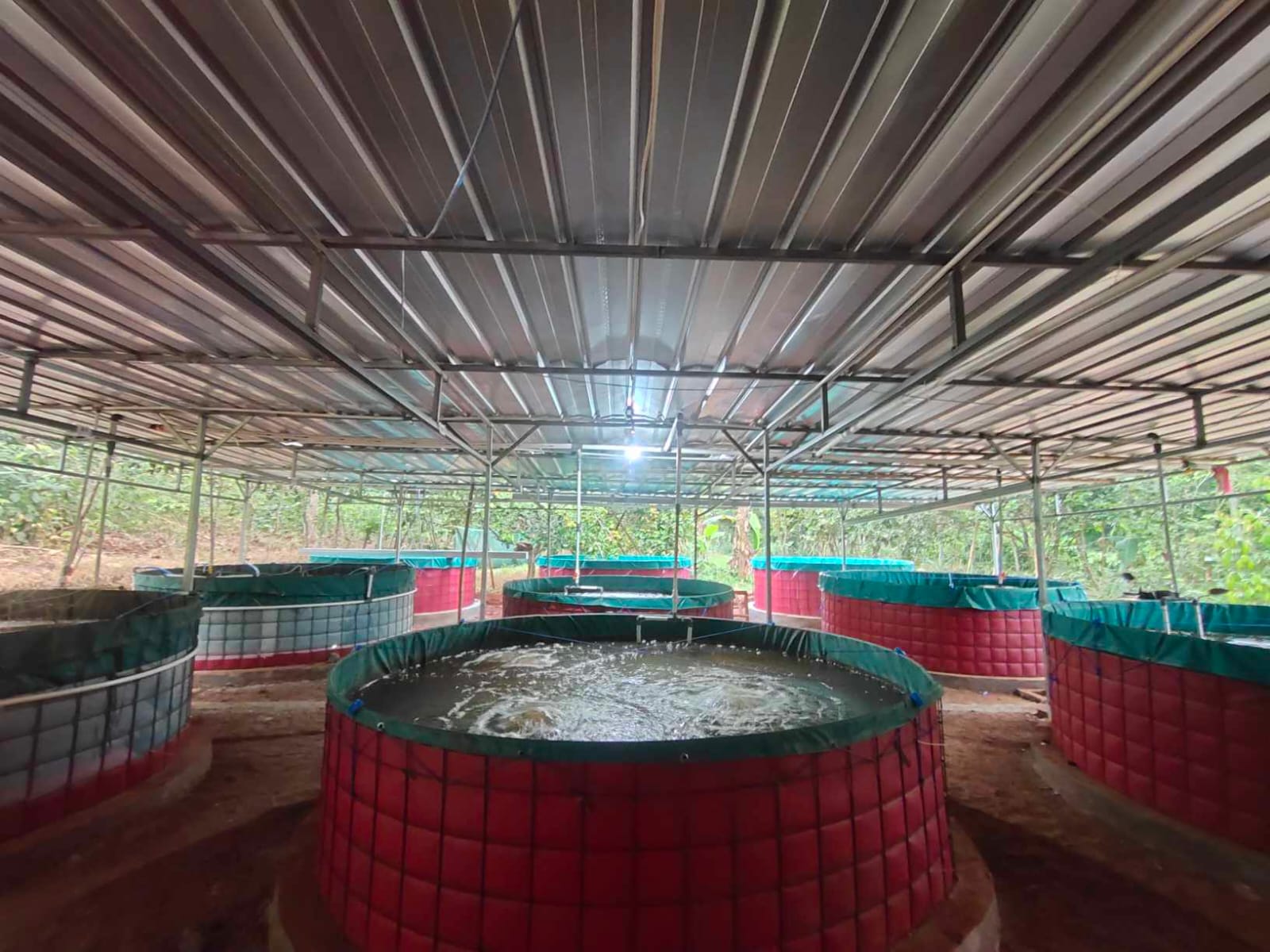
Weekly application of lime in biofloc ponds to maintain optimal conditions: BPBAT Tatelu
However, lime application must be done cautiously, taking into account the pond’s specific needs and the fish species being farmed. Overuse of lime can excessively raise the pH, which can also harm fish health.
Adding reserve water to stabilize temperature
When pond temperatures drop below the optimal range for fish, it is important to act quickly to restore a favorable environment. One effective solution is adding reserve water to the pond.
Reserve water is pre-stored in a covered container for several days, allowing it to stabilize at ambient temperature. This equilibrium ensures that the reserve water’s temperature is consistent and less affected by air temperature fluctuations.
Adding reserve water to the pond helps maintain a stable temperature, preventing sudden changes that can stress fish. By increasing the pond’s water volume with stable-temperature water, drastic temperature swings are minimized, allowing fish to better adapt to environmental changes. Reserve water can also help maintain overall water quality, as it typically settles out suspended solids over time, reducing contamination risk and enhancing water clarity.
Increasing oxygen supply with aerators
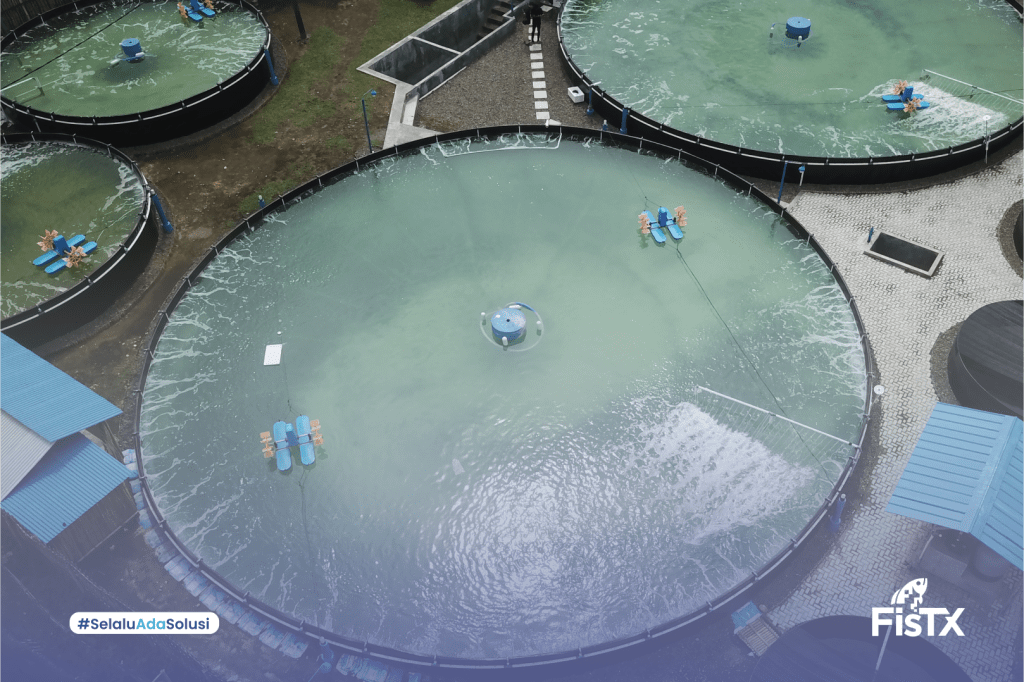
To combat the decrease in dissolved oxygen in pond water during the rainy season, aerators offer an effective solution. Aerators are specially designed devices that increase water oxygenation, ensuring sufficient oxygen supply for fish even when dissolved oxygen levels are low.
Aerators work by releasing air bubbles into the water, which then dissolve and raise the oxygen concentration. This process mimics natural oxygenation from atmospheric air, but with an aerator, the rate and amount of oxygen diffusion are significantly boosted, maintaining sufficient oxygen levels even in suboptimal rainy-season conditions.
Aerators also circulate and mix the pond water, evenly distributing oxygen throughout the entire volume and reducing low-oxygen “dead zones.” This movement additionally improves water quality by preventing organic matter from accumulating at the pond’s bottom, reducing potential contamination and keeping the aquatic environment healthier for fish