
Indonesia, renowned as a maritime nation, boasts abundant aquatic resources, making it one of the world's most promising countries for fishery production. These resources are not limited to marine ecosystems but extend to freshwater and brackish water environments as well. This vast potential contributes significantly to the national economy across various fishery sectors, including aquaculture and wild capture. According to Indonesia's Ministry of Marine Affairs and Fisheries (KKP), the fisheries sector contributed 2.66% to the national GDP in 2023, an increase from 2.58% in 2022.
Among Indonesia's popular freshwater fish commodities is the catfish, commonly referred to as ikan patin. This species has long been a cornerstone of aquaculture due to its rapid growth, environmental resilience, and high nutritional value. Furthermore, the market demand for catfish continues to grow, both domestically and internationally. According to data from Indonesia’s Central Statistics Agency (BPS), the national production of catfish reached 332,035 tons in 2021, rising to 342,297 tons in 2022.
Among the various catfish species, Pangasius micronemus stands out for its unique morphology, ecological habits, and notably high fish oil content. This species holds significant scientific and ecological value, making it a subject worthy of further study. This article delves into the taxonomy, morphology, distribution, ecological behavior, and fish oil content of Pangasius micronemus, shedding light on its potential and importance in freshwater aquaculture.
Taxonomy and morphology of Pangasius micronemus
The scientific classification of Pangasius micronemus is as follows:
- Kingdom: Animalia
- Phylum: Chordata
- Class: Osteichthyes
- Order: Siluriformes
- Family: Pangasiidae
- Genus: Pangasius
- Species: Pangasius micronemus
Pangasius micronemus is a freshwater fish species belonging to the family Pangasiidae, known for its extensive distribution in tropical and subtropical freshwater environments. This family encompasses a diverse range of species widely found across freshwater systems in Asia.
As a member of the genus Pangasius, Pangasius micronemus is part of a group of catfish recognized for their remarkable adaptability to various environmental conditions. Species within this genus inhabit diverse freshwater habitats, from large rivers to slow-flowing delta regions.
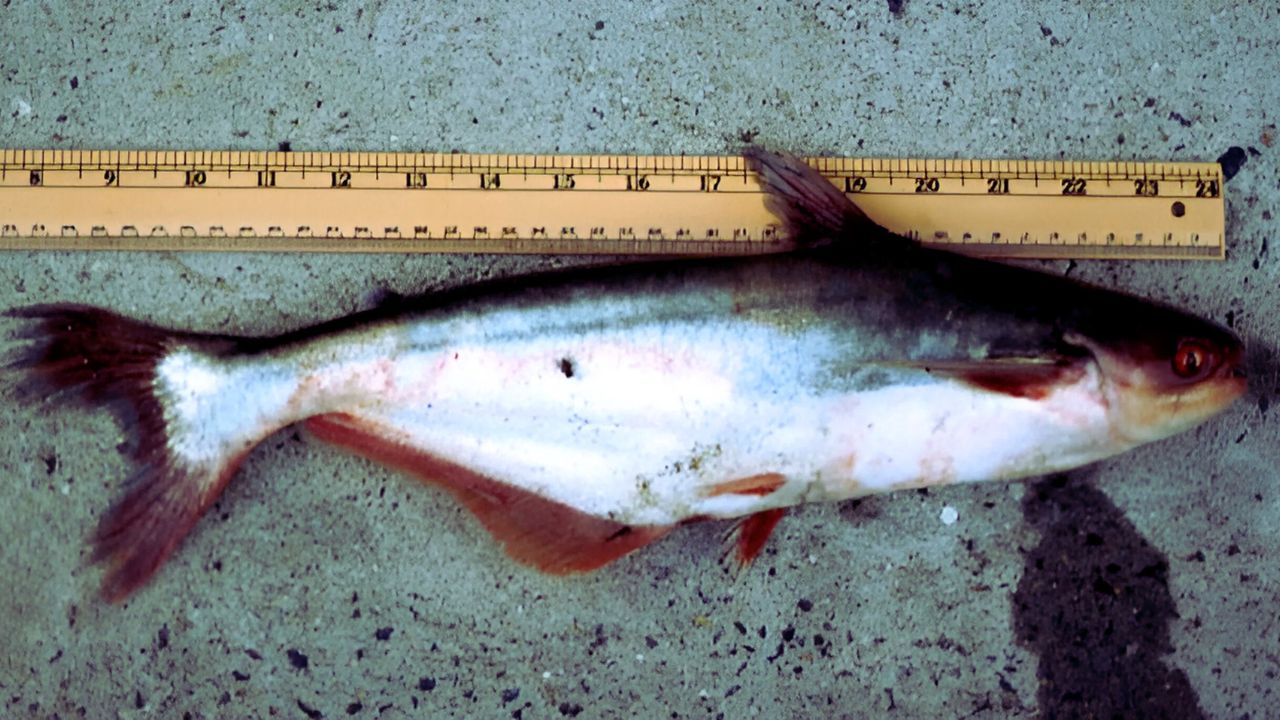
Like other members of the Pangasius genus, Pangasius micronemus has a scaleless body, a silvery-white coloration, and a mouth positioned at the tip of its head, slightly downward-facing. However, it exhibits distinct features that differentiate it from other species in the Pangasiidae family.
The body of Pangasius micronemus is elongated and silvery-white, with a relatively small head. These adaptations reflect its specialization for life in large riverine habitats. Notably, Pangasius micronemus is smaller in size compared to its relatives. While other species, such as Pangasius hypophthalmus, can grow up to 120 cm in length, Pangasius micronemus reaches a maximum length of approximately 30 cm. This size variation highlights differences in lifestyle and habitat preferences among species within the genus.
Several unique traits further distinguish Pangasius micronemus:
- Anal Fin Rays: This species has 28–38 soft rays in its anal fin, a key diagnostic feature.
- Eye Size: The eye diameter is proportionate to the head length, ranging from 4 to 5 times the length of the head. In larger specimens, the eye diameter can reach up to 18 cm, an adaptation to the dimly lit environments of large rivers.
- Caudal Fin: The caudal fin is dark gray, contrasting with the silvery-white body.
- Barbels: It possesses maxillary barbels, characteristic of catfish, but they are relatively short, not extending beyond the preoperculum.
- Teeth Structure: The vomero-palatine teeth are arranged in four oval-shaped clusters, supporting its feeding habits.
Distribution and habitat of Pangasius micronemus
Pangasius micronemus has a broad distribution across Asia, particularly in Southeast Asia. It is commonly found in the Mekong River Basin, which spans four countries: Vietnam, Laos, Cambodia, and Thailand. The Mekong River, one of Asia's largest river systems, provides an ideal habitat for this species, characterized by fast-flowing waters and muddy or sandy substrates. Additionally, the species inhabits the Hue River in Vietnam and various rivers on the Malay Peninsula, including regions within Malaysia.

The Mekong River in Luang Prabang, Laos
In Indonesia, Pangasius micronemus is distributed across several major islands with extensive river networks. On Sumatra, it thrives in large rivers such as the Batanghari and Musi, which are known as critical freshwater ecosystems on the island. In Kalimantan, the species is found in the Kapuas, Mahakam, Rejang, and Kinabatangan rivers, all of which offer suitable flow conditions for its survival. Its distribution also extends to Java, where it inhabits major rivers like the Bengawan Solo and Citarum.
The natural habitat of Pangasius micronemus is predominantly medium to large rivers. The species favors areas with moderate to strong currents and substrates composed of mud or sand. These conditions support its breeding and feeding activities, allowing the fish to thrive.
The wide distribution of Pangasius micronemus across multiple countries and regions underscores its ecological significance in maintaining the balance of freshwater ecosystems in Southeast Asia. Its presence in diverse habitats also highlights its adaptability and importance as a species in freshwater biodiversity conservation.
Behavior and feeding habits of Pangasius micronemus
Pangasius micronemus is an omnivorous fish with a highly adaptable diet, enabling it to thrive in diverse aquatic environments. As an omnivore, it consumes a variety of organic materials, including both animal- and plant-derived sources. This dietary flexibility allows the species to survive even in habitats with fluctuating food availability.
A primary component of the diet of Pangasius micronemus is detritus—decomposed organic matter that accumulates on riverbeds. Detritus is nutrient-rich and abundant in the medium and large rivers where this species resides. In addition to detritus, the fish consumes plankton, including both phytoplankton (microscopic photosynthetic organisms) and zooplankton (tiny aquatic animals), which are essential components of freshwater food chains. Small aquatic creatures, such as shrimp and water insects, also form part of its diet, complementing its omnivorous feeding habits.

Small insects as a food source for Pangasius micronemus
This dietary versatility provides significant advantages, particularly in environments subject to changes such as flooding or water quality degradation. By adapting its feeding behavior to the availability of local resources, Pangasius micronemus can maintain its ecological role as a contributor to the balance of freshwater ecosystems.
In addition to its diverse diet, Pangasius micronemus exhibits unique feeding behavior. It is primarily nocturnal, actively foraging at night to avoid brightly lit areas. This nocturnal activity reduces its exposure to predators and allows it to exploit quieter, less competitive conditions for feeding.
Fish oil content in Pangasius micronemus
Pangasius micronemus is recognized not only as a source of high-quality protein but also as a significant producer of nutrient-rich fish oil. The fish oil found in this species contains valuable nutrients that offer numerous health benefits, particularly due to its omega-3 fatty acids, such as eicosapentaenoic acid (EPA) and docosahexaenoic acid (DHA). Omega-3s are essential components that support brain function, promote heart health, and reduce inflammation, making the fish oil from Pangasius micronemus a highly beneficial addition to a healthy diet.
Studies indicate that Pangasius micronemus has a moderate fat content, with the majority of these fats being healthy, beneficial oils. Specifically, the fish oil content in Pangasius micronemus is 3.82%, which is significantly higher than that of species such as the snakehead fish, which contains only 0.4%. Additionally, the total fatty acid content in Pangasius micronemus is 5.75%, surpassing that of other fish like the snakehead (4%) and the carp (2.9%).
The fish oil from Pangasius micronemus also contains notable levels of EPA and DHA. EPA content ranges from 0.21% to 2.48%, while DHA content varies from 0.95% to 9.96%. The high DHA content is particularly beneficial for brain development, especially in children and during pregnancy, supporting cognitive function and development. Meanwhile, the EPA plays a crucial role in maintaining vascular health and reducing the risk of cardiovascular diseases.